Key takeaways
- Saj is the thin Lebanese flatbread cooked on a convex metal dome griddle, which is also called a saj.
- The dough is unleavened flour, water and salt, stretched paper thin and baked in seconds.
- Saj and markouk are nearly the same bread, while manoushe is thicker and defined by its toppings.
- Common fillings are zaatar, white cheese, kishk and seasoned meat, folded fresh off the griddle.
- Manoushe, the flagship saj breakfast, joined UNESCO's heritage list in December 2023.
Saj is a thin Lebanese flatbread baked on a hot, dome-shaped metal griddle that carries the same name. The dough is a simple mix of flour, water and salt, stretched by hand until it is almost see-through, then draped over the convex dome to cook in seconds. If you have eaten a street-corner zaatar wrap in Beirut, you already know saj.
This guide explains the oven behind the bread, how saj differs from markouk and the everyday manoushe, the fillings people reach for, and where to find the real thing in Hamra.
What Is the Saj Oven and How Is the Bread Cooked?
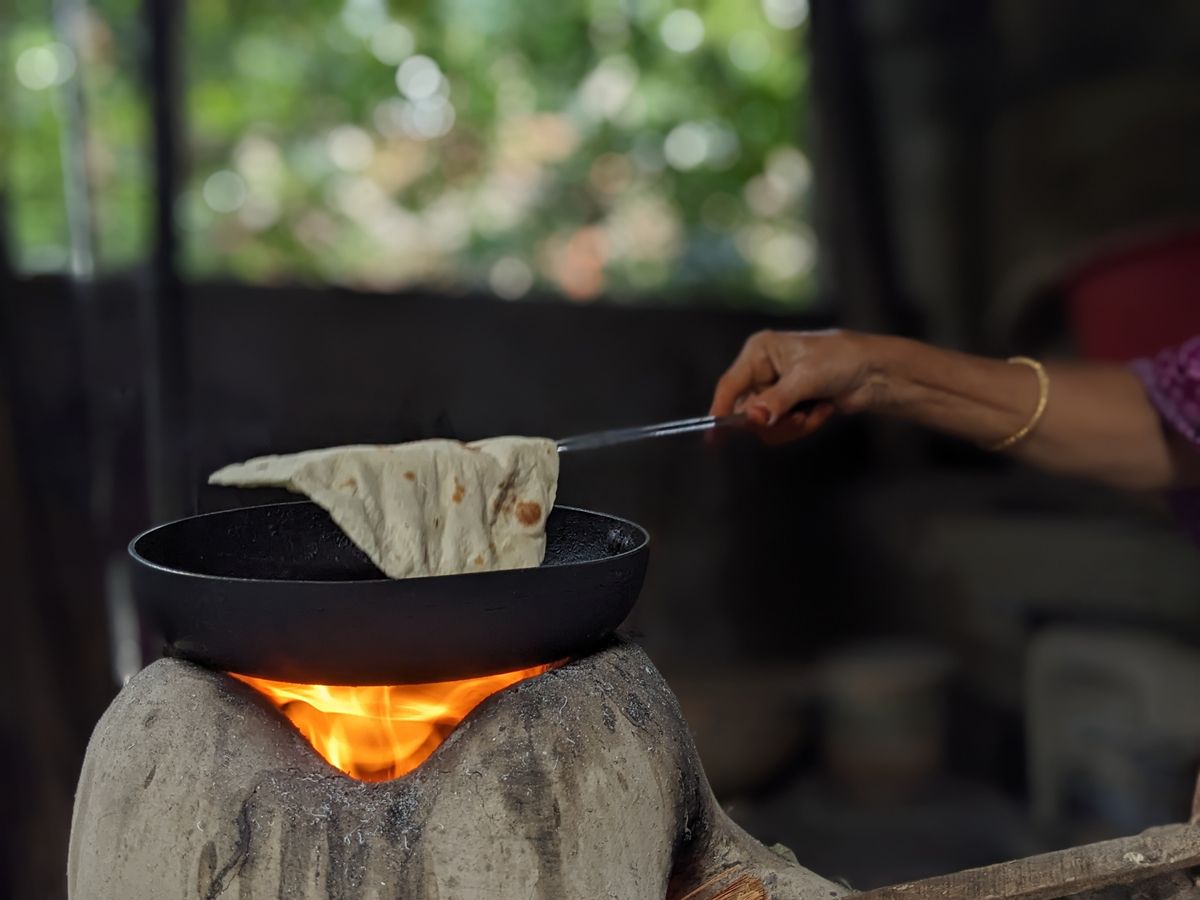
The saj is a convex metal dome, heated from below, and the bread is named after it. A baker takes a ball of unleavened dough, flattens it, then stretches and tosses it until it is wide and paper thin. The sheet is laid over the hot dome, where it bakes almost instantly.
According to the culinary reference 196 Flavors, the finished bread runs roughly 0.5 to 2 mm thick and about 50 to 65 cm across, and it cooks in only 15 to 20 seconds (196 Flavors, 2024). That speed is the whole point. The thin dough hits the searing dome, blisters, and comes off soft and foldable.
The shape matters too. Because the surface curves outward, heat spreads evenly and excess moisture runs off rather than pooling. A large dome also gives the baker room to work several breads at once during a busy morning rush.
There is real skill in the stretch. The baker pulls the dough over the backs of the hands and lets gravity and a gentle spin thin it out, the way a pizzaiolo opens a pie. Too thick and the bread turns doughy. Too thin and it tears on the hot metal. A practiced hand reads the dough by feel and gets an even sheet every time.
Heat control is the other half of the craft. The dome has to be hot enough to set the surface in seconds but not so hot that it scorches before the center cooks. Bakers manage this with the flame underneath and by moving the bread around the dome, using the cooler edges and the searing crown as needed.
Saj, Markouk and Manoushe: What Is the Difference?
The three names confuse a lot of first-time visitors, so here is the plain version. Saj and markouk are nearly the same bread. Markouk is the paper-thin sheet, and saj is the dome it bakes on, which is why Lebanese cooks often use the words interchangeably.
Manoushe sits in the same dough family but plays a different role. It is thicker and smaller, and it is defined by what goes on top rather than by its thinness. A manoushe can bake on a saj or in a clay oven, while markouk almost always comes off the dome griddle.
Here is a quick way to keep them straight:
- Saj: the dome griddle, and by extension the thin bread baked on it.
- Markouk: the extra-thin, almost translucent flatbread, native to Lebanon's Chouf mountains.
- Manoushe: a thicker round, topped before baking, best known as the Lebanese breakfast.
That breakfast tradition is now internationally recognized. Manoushe was inscribed on UNESCO's Representative List of the Intangible Cultural Heritage of Humanity on 6 December 2023, described as an emblematic culinary practice in Lebanon (UNESCO, 2023).
The ovens also tell them apart. A manoushe often bakes on a flat surface or inside a stone or clay oven, which gives it a softer, slightly puffier base. Markouk needs the convex dome to go as thin as it does. So when you see a tall dome glowing over a flame, you are almost certainly looking at saj in action.
Texture is the giveaway at the table. Markouk comes off thin and pliable, easy to fold around a filling or tear into pieces for dipping. Manoushe eats more like a small pizza, with a chewier crumb that holds a generous layer of topping. Both belong to the same family, yet they feel different in the hand.
What Are the Most Popular Saj Fillings?
Zaatar is the classic. The dried thyme blend, mixed with sumac, toasted sesame and olive oil, turns a bare sheet of bread into the most familiar Lebanese snack there is. It is simple, cheap and eaten at every hour.
Cheese comes a close second. Soft white akkawi or a stretchier kashkaval melts into the warm bread, sometimes with a scatter of mint or a few slices of tomato. From there the list opens up:
- Kishk: a tangy paste of fermented yogurt and bulgur, often cooked with onion and a little fat.
- Meat: seasoned minced lamb or beef, the lahm bi ajin style, or spiced chicken.
- Labneh: thick strained yogurt, usually with olive oil, cucumber and mint for a cooling wrap.
Many people order a split: zaatar on one half, cheese on the other, folded together so each bite has both. A good saj counter will happily build whatever combination you ask for.
How Is Saj Made Fresh to Order?
Saj is a made-to-order food by nature, because the bread only tastes right straight off the dome. The baker stretches the dough, lays it on the hot saj, then adds your topping while the bread is still on the heat so cheese softens and zaatar warms into the oil.
Once the base is set, the bread is folded or rolled around the filling and handed over within a minute or two. Nothing sits in a warmer. The large dome lets a baker run several orders at the same time, which is how a Beirut saj stand keeps a queue moving without the bread ever going stale.
That live, in-front-of-you preparation is part of the appeal. You watch the dough go from a lump to a thin golden sheet to a wrapped sandwich, and you eat it warm. It is fast food in the most literal sense, yet every step is still done by hand.
Where Can You Try Authentic Saj in Hamra?
The best saj in Beirut is the kind baked on a visible dome while you wait. In Hamra, look for a venue where the griddle is part of the room and the bread is folded to order rather than pulled from a shelf. Freshness is the single clearest sign you have found the real thing.
3al Awwal in Hamra fits that bill. The kitchen bakes saj fresh through the day and sets it alongside a full Lebanese spread of mezze, grills and a proper breakfast, so you can pair a zaatar or cheese saj with the rest of the table. It suits both locals grabbing a quick manoushe and visitors sitting down for a longer meal with shisha.
If you want to plan the wider table before you go, our guide to Lebanese breakfast in Beirut covers what to order and how the morning spread fits together.
Next time you are in Hamra in the morning, skip the packaged pastry and order a saj straight off the dome. Ask the baker to fold zaatar and cheese together, eat it while it is still warm, and you will understand why this thin bread has anchored Lebanese tables for generations.
Frequently asked questions
Is saj the bread or the oven?
Both. Saj first names the convex metal dome griddle used to bake the bread. The thin flatbread cooked on that dome then takes the same name.
What is the difference between saj and markouk?
They are nearly the same thing. Markouk is the paper-thin bread, and saj is the domed griddle it bakes on. In Lebanon the two names are often used interchangeably.
What is the difference between saj and manoushe?
They share the same dough family. Manoushe is thicker and smaller and defined by its toppings such as zaatar or cheese, and it can bake on a saj or in a clay oven.
What are the most popular saj fillings?
Zaatar with olive oil, white cheese like akkawi, kishk made from fermented yogurt and bulgur, and seasoned meat or chicken are the classics across Lebanon.
Where can I try authentic saj in Hamra, Beirut?
Look for a venue baking to order on a visible dome griddle. 3al Awwal in Hamra serves fresh saj alongside a full Lebanese breakfast and mezze menu.
Leave a Reply